Sodium (salt) is found in many foods we eat, even if it does not taste salty. Do you realize there is more salt in a serving of corn flakes cereal than a serving of regular potato chips. Most adults and children get more sodium than their bodies need. If salty foods are eaten often, we develop a preference for salt in foods. Some salt certainly brings out the flavors while cooking and a little goes a long way as it melts and flavors the food. However, adding additional salt at the table is just not good for any of us so, remove the salt shaker from the table. By offering foods and drinks that are lower in sodium, adults can help children develop healthy eating patterns. Starting early in life can be easier than trying to change eating habits later on. This may help reduce the risk of certain health problems like Hypertension or commonly called high blood pressure.
How Can I Find the Lower Sodium Option? The Nutrition Facts label on food packages lists the amount of sodium in a food. Compare the amount of sodium in similar types of foods, such as crackers, and choose the ones that are lower in sodium.
How Much Sodium Is Too Much? Children ages 1–3 years should get less than 1,200 milligrams (mg) of sodium per day. Children ages 4–8 years should get less than 1,500 mg per day. According to the Dietary Guidelines for Americans, healthy adults should consume no more than 2,300 mg of sodium per day. That is about one teaspoon. While that's the daily recommended intake, the American Heart Association says the ideal for many adults is closer to 1,500 mg per day. Follow your doctor’s advice if you have hypertension.
How Can I Lower Sodium in Meals and Snacks? Here are a few strategies that can lower the sodium you and your family eat:
At the grocery store:
Buy unprocessed protein foods such as lean chicken, turkey, seafood, pork, and meat more often than prepared, processed, and ready-to-eat meat and poultry. Examples of processed and prepared meats and poultry are sausages, bologna, frankfurters (hot dogs), luncheon meats (deli meats), pepperoni, and pre-marinated options.
Look at labels on canned and packaged foods. Choose unsalted (no salt added), low-sodium, reduced sodium, or lightly salted foods instead of regular versions.
Buy fruits and vegetables as snacks instead of chips, pretzels, and other salty snacks.
At home:
Rinse canned beans and vegetables under cold water.
Use herbs and spices instead of salt.
Cook and eat at home more often as you can control the amount of salt added while cooking.
How Can I Cook Foods With Lower Sodium Ingredients? Herbs, spices, garlic, lemon juice, and vinegars are examples of ingredients you can use to add flavor to foods without adding salt. Avoid pre-packaged seasoning blends that contain sodium or salt (like garlic salt, seasoning salt, etc.).
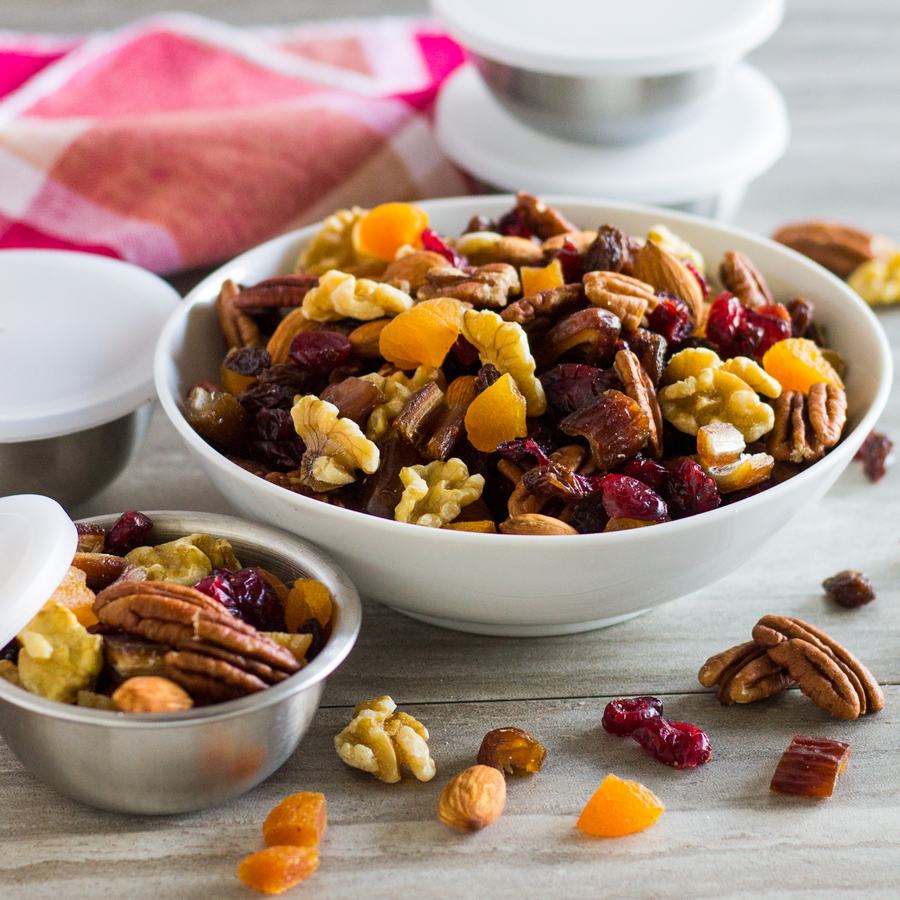
Healthy Trail Mix Serving size: ¼ cup
Healthy Trail Mix
Making trail mix from scratch is the healthiest option. Prepackaged mixes are often coated with sugars, unhealthy fats, sodium, and preservatives.
¾ cup raw pecans
¾ cup raw cashews
¼ cup raw sunflower seeds
¼ cup raw pumpkin seeds
½ cup apricots
1/2 cup raisins
Directions:
Combine all ingredients in a large bowl and mix well.
Store in a Ziploc bag or glass jar.
The Med instead of Meds educational program that I love to teach has a yummy recipe, “Green Olive Sauce with Chicken.” The nutrition facts for this recipe states it has 900 mg of sodium per serving. My first glance at the recipe I note that the recipe does not list salt as an ingredient. However, it calls for three cups of Green Olives as a main ingredient in the sauce served over Chicken. Three cups of olives is a lot of olives and when I read the nutrition label on the jar of green olives I confirmed that is a lot of sodium. Then I wondered if they use fresh olives in the Mediterranean region. Well, my research revealed that raw, fresh olives straight from the tree contain oleuropein, an extremely bitter compound that makes olives completely unpalatable. Thus, all edible olives are always preserved in a brine of salt water or salt and oil. Because olives are a fruit that contain vitamin E, antioxidants, and healthy fats they are part of the healthy Mediterranean Cuisine.
So what can we do to reduce the sodium from brined foods? Simply drain the brine out and rinse the food in cold water before using it will reduce up to 25% of the sodium from the brined food. Four olives is considered a serving. So if you are watching your sodium intake, follow your doctor’s orders for your daily limit, practice draining and rinsing your brined foods, and reduce the amount you add to a recipe. In this case reduce the amount of sauce you add to your serving of chicken!
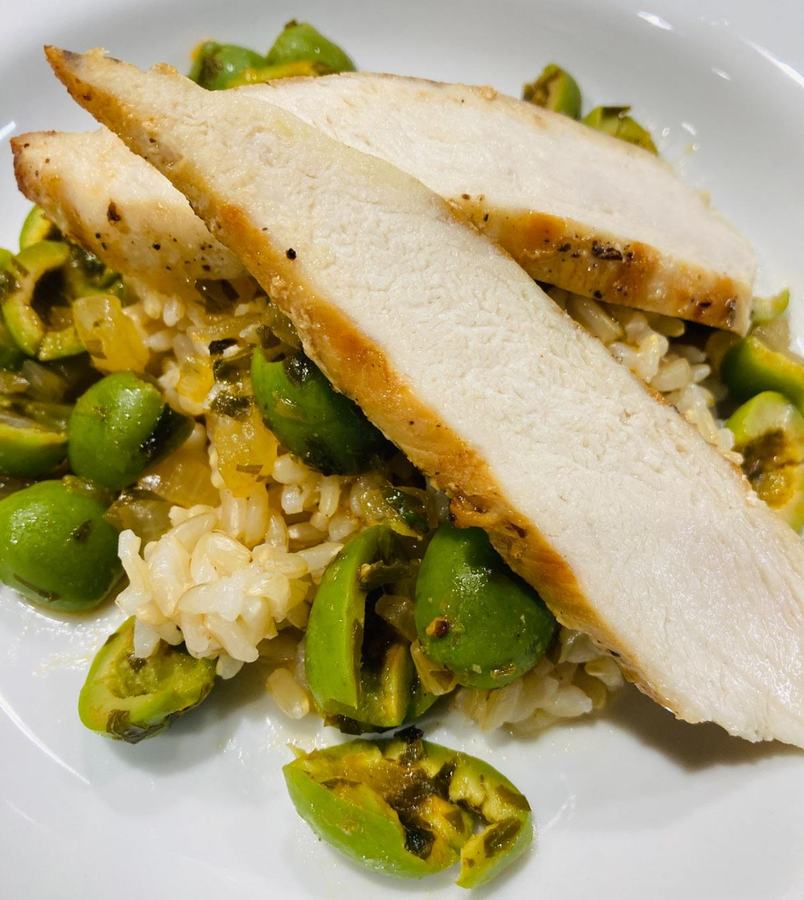
Green Olive Sauce with Chicken Serves 8
Green Olive Sauce with Chicken
A versatile sauce that can be paired with not only chicken but salmon, snapper, or other white fish! Make it vegetarian by pairing the sauce with a grain.
1 Tablespoon olive oil
1 onion, chopped
½ teaspoon black pepper
½ teaspoon ground cumin
½ teaspoon paprika
¼ cup parsley, chopped
3 cups green olives, drained and rinsed well then sliced (include less)
3 Tablespoons lemon juice
4 cups cooked brown rice or quinoa
4-6 chicken breasts, grilled or baked, and sliced
Directions:
Heat olive oil in a large skillet. Add the onions and sauté until translucent. Do not allow it to brown.
Add the black pepper, cumin, paprika, parsley, and drained and rinsed green olives to the pan. Cook over low heat for 5-10 minutes.
Add the lemon juice, taste, and adjust seasoning.
To serve, place ½ cup cooked brown rice or quinoa on a plate, layer with about 4 ounces chicken slices, and evenly top with the green olive sauce.
Nutrition Facts: (Serving size: ½ cup of rice, 4 oz of chicken, and sauce) Calories: 340, Fat: 12 grams, Sodium: 900 mg, Carbohydrates: 32 grams, Fiber: 4 grams, and Protein: 29 grams.
Bottom line: Draining and rinsing brined food, adding less brined food to a recipe, and consuming less brined food will reduce the amount of sodium. Always ask your doctor for dietary restrictions if you have hypertension.
Sources for this article NC Extension Food and Nutrition, Meds instead of Meds educational program. The research and selection of tested recipes was compiled by Alyssa Letchworth, ECU student intern, For more information about the Foods and Nutrition please contact Louise L. Hinsley, Extension Agent, Family Consumer Science at the Beaufort County Center of N.C. Cooperative Extension, 155 Airport Road, Washington, 252-946-0111.