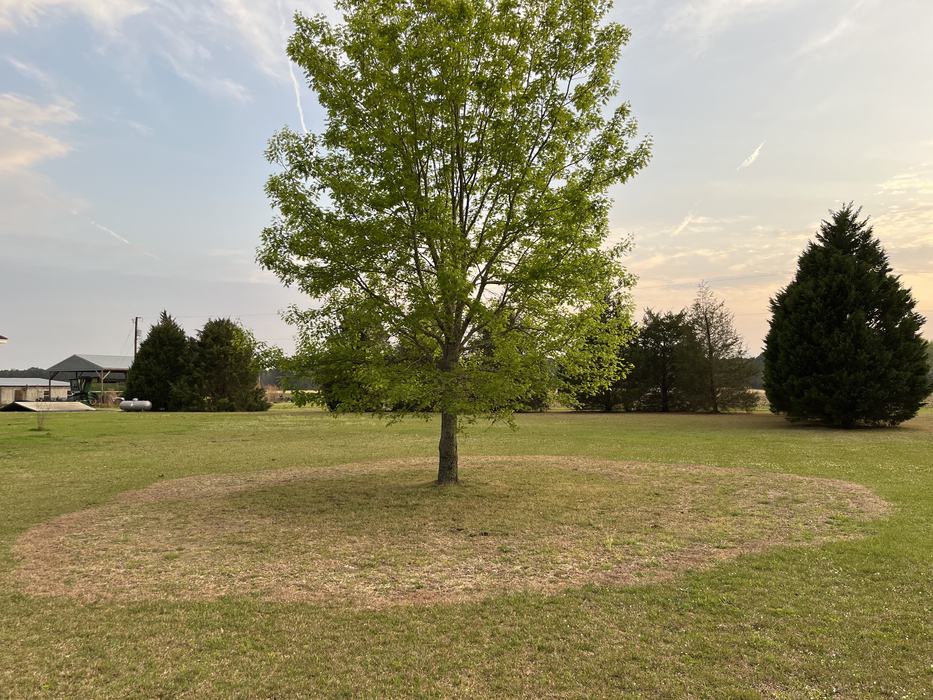
I have received all kinds of calls this week but there was one that really stood out. The caller asked, “What is wrong with my grass?
First, a few words about centipedegrass. This grass is known as the lazy man’s grass because it just doesn’t grow that fast. That is good from a maintenance standpoint but it isn’t so good from a recovery standpoint. Because centipede takes so long to grow, it also takes a long time to recover from damage. It likes a lower pH (5.5, no lime), takes less fertilizer, is drought tolerant and you only need to mow it every seven to ten days. It is also very difficult to establish, especially if propagating from seed. Centipedegrass takes a whopping 28 days just to fully germinate! As the moniker goes, “The first year it sleeps, the second year it creeps and the third year is leaps!”
Lately, I have been seeing an uptick in the occurrence of ground pearls. These are small scale insects that attach to the roots of the grass. They then intercept water and nutrition that would otherwise go to the plant causing the plant to look unthrifty. They are difficult to diagnose and even more difficult to treat. The reason they are difficult to treat is because it is so difficult to get the treatment to move down into the soil profile. Like other scale insects, the insecticide doesn’t penetrate the waxy coating around the insect. In centipedegrass, the recommendation is to change the grass over to Bermudagrass. This grass grows much quicker and can recover from the damage, especially with the addition of fertilizer and irrigation.
The best defense against disease, insect, and weed pests is to give your grass everything it needs to grow well. A dense healthy turfgrass will outcompete most pests. The number one cultural practice is to cut your grass at the correct height. In the case of most warm-season grasses, the correct height is from 1 to 2 inches. Bermudagrass will perform best at one inch in height. Centipedegrass will perform well between an inch and one and a half inches. These grass are so intolerant of shade that they will become stressed from their own shading if left to grow any higher.