Tis the season! This is the time of year when we start seeing a number of cool things in the landscape. I had a sample in the office this morning from a landscape bed. At first glance they resemble packing peanuts from the latest Amazon delivery but looking a little closer, they were more like little eggs. I knew what they were but only because I had researched them before! These were fruiting structures or what I more commonly call eggs of a fungus. The fruiting body is typically going to present itself in the form of a mushroom, but in this case, unlike the chicken, the egg comes first!
Did These White Things Kill My Roses?
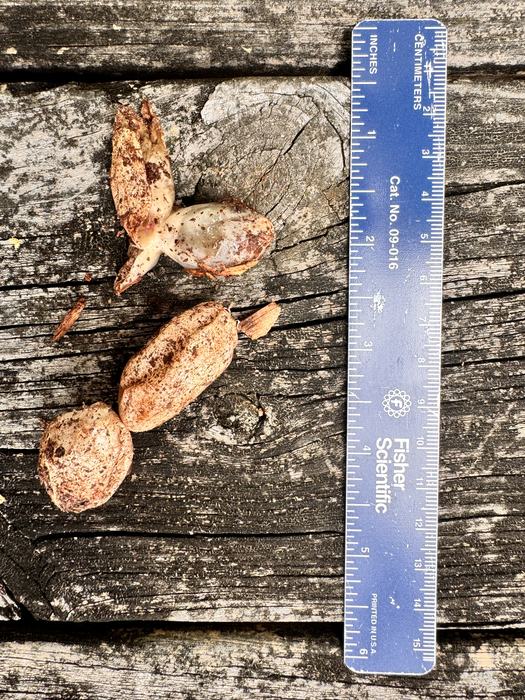
Now why would I call it a fruit body? This is the reproductive structure of the fungus. The mushroom will spring up when the conditions are right for the spore to spread. As the mushroom matures, it will release the spore to spread the fungus. The spore is like the seeds of the fungus. They come in different colors and make different patterns that can be used to help identify the mushrooms. When the spore is released, it will ride the wind or may hitch a ride on an animal kind of like pollen on a bee. Once it lands, it will begin to grow producing mycelium. This is like the holding stage of the fungus. When conditions are right again, the fungus will produce the fruiting body to continue the cycle.
This particular sample is from a common stinkhorn mushroom most likely from the Phallus genus. You just see the cap of one of the mushrooms beginning to emerge. This is one of those, if you know, you know type things…they stink! Once you smell them you will understand. They smell like rotting flesh to attract flies. They actually produce a nasty slimy substance that covers the cap. Flies are attracted and get covered with slime that contains the spores, then they inoculate new areas as they land.
There are several types of stinkhorns that we may see in our landscapes (I wrote about another type this past March). Some look like pink Pi signs and others resemble a pinkish-orangish octopus. These are litter feeders so not something that we need to worry about in regard to harming our plants. They decompose the dead organic matter to release nutrients that feed microbial activity. They typically come in on mulch that is placed around trees or in landscape beds. Cool wet weather is the perfect time to see them! If you have stinkhorns, there is very little that can be done to get rid of them. Do not go spraying down your mulch with fungicides! Digging out the mulch may help but that is like putting a band-aid on a broken arm. See, these fungi grow tiny hair-like structures called hyphae that grow throughout the soil and mulch. So, removing the mushrooms or the mulch would be like taking a few blades of grass out of your lawn. When you see the mushrooms, it means that the hyphae are already present, the fruiting bodies are the last stage of development.
The question was, did these white things kill my rose bush? The answer is no, they did not. Again, these are decomposers of dead organic material. There are a number of things that will kill a rose bush. The first and probably most prevalent is the rose rosette virus. If you aren’t familiar, I have an article on our website from February 2024. Next would be root rot. Finally, there are a number of issues that will plague the roses but not necessarily kill them. These are Japanese beetles, black spot, and powdery mildew. Black spot is the most prevalent of these but is easily prevented or controlled with timely fungicide applications and good sanitary practices.
If you are having an issue in your home garden or landscape, send your questions to Gene Fox, Consumer Horticulture Agent with the North Carolina Cooperative Extension Service, please email Gene at gene_fox@ncsu.edu or call at (252)946-0111. Check out our Facebook page, Beaufort County Master Gardeners, for The Plant of the Week and Food Garden Friday! If you would like to know more about this program, please give me a call. Until then, Happy Gardening!
Join our mailing list!
Enter your email address to receive updates.
Written By

Contributors