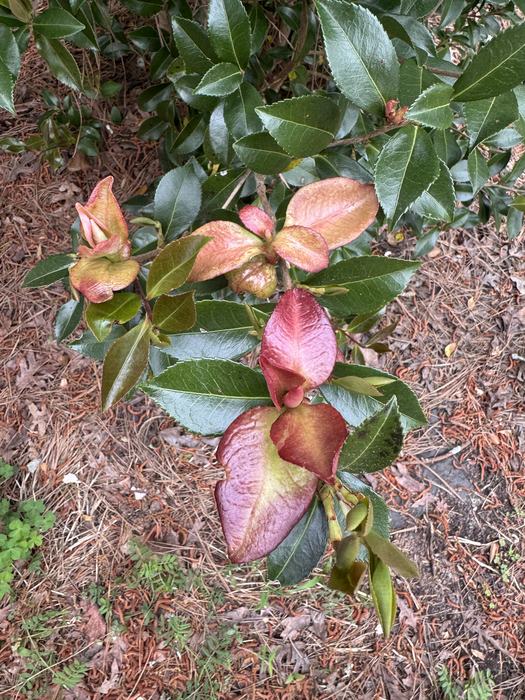
There have been lots of calls this week, ranging from recommendations for landscapers to what is wrong with my plant. I have even had some issues of my own this past weekend.
Did you know, that Cooperative Extension is an educational resource arm of NC State and NC A&T State Universities? We are charged with disseminating research-based, unbiased educational materials to improve the daily lives of the public we serve. It is for this very reason, that we cannot recommend certain service providers over others, we would then be biased! There are some important factors in choosing any service, however. It is important to ask for references and to ask the service provider if they have any pertinent licenses in their area of expertise. For example, if I were to need an arborist, I would want to make sure that the person I hire has an Arborist License. This tells me that they have had to pass a basic skills exam, they are required to attend several continuing education classes per year, and they are required to adhere to a professional code of ethics to maintain their license. If I were looking for a landscaper, I might check to see if they have a current Pesticide License or a Landscape Contractor’s License for the same reasons.
The next most frequent call this week was what is wrong with my plant? One of the best ways for me or an Extension Master Gardener SM Volunteers to diagnose a plant problem is to call our office. Talk to one of us directly or if no one is in the office, leave a message with the staff. They will send the information to a spreadsheet available to me no matter where I am. While I serve a five-county area, this is one way that I maintain my accessibility while out of the office. Please be patient with us, I am rarely in the office, and the Volunteers only man the Greenline on Mondays and Wednesdays. We will be in touch as soon as possible! In the meantime, it is important to send us pictures of the problem plant. This can be done through email (gene_fox@ncsu.edu), text messages change the size of the picture limiting how far we can Zoom in. Make sure to send an in-focus close-up of the problem or insect and a picture of the whole plant. If it is a leaf problem, take pictures of both the upper and lower leaf surfaces. This will help me and our volunteers to give you timely advice. If it is an issue that cannot be diagnosed through pictures and/or conversation, I will then schedule a home visit to look at the problem.
Now, on to my problem, I discovered over the weekend. My wife wanted some ferns to add to the look of our beautiful home. We were in Raleigh so we dropped by the State Farmers’ Market and grabbed some beautiful hanging ferns. I had to then stop at the hardware store to grab a few hooks and lengths of chain to hang the baskets. It is important to put your hanging baskets on a chain so they can move, otherwise you will see wind damage very quickly in our area. While working on the hooks, I noticed some funny-looking leaves on my camellias. I have a number of camellias around my home landscape, both Camellia japonica and C. sasanqua. You can tell the difference by when they bloom and by looking at the leaves. The C. sasanqua leaves are smaller and somewhat more delicate than the C. japonica. They also bloom at different times with the C. sasanqua blooming in fall to early winter and the C. japonica blooming in late winter into early spring.